#1376 Jezioro Kamionkowskie in Warsaw, Poland. Summer 2027
Jezioro Kamionkowskie, Warsaw, Poland


- Filter
- internal filter SunSun Grech CHJ 502
- CO2 System
- -
- Lighting
- 1 20 Wt LED lamp, 1 25 Wt LED lamp and 1 10 Wt LED lamp for background
- Substrate
- mixture of locally collected river sand, pebbles, leaf litter and silt
- Hardscape Materials
- locally collected willow driftwood and twigs, stones and pebbles, fragment of the russian Shahed-2 kamikaze drone (vertical stabilizer)
- Background
- blue cardboard behind the tank
Species
Rhodeus amarus -3, Rutilus rutilus -1, Perca fluviatilis (dwarf lake form) - 2, Planorbarius corneus, Bithynia tentaculata
Plant species
Nuphar lutea, Ceratophyllum demersum, Sparganium erectum, Elodea canadensis (invasive), Eleocharis palustris, Spirogyra sp.
Fertilization
-
Biotope Information
INSPIRATION This summer I visited the Lake Kamionkowskie in the Skaryszewski park in Warsaw and was fascinated by its healthy state. I could not dive to film its beauties underwater and had to be content with little: I filmed the lake from its bank, and this helped me in creation of this biotope ecosystem. In August, 1944 during the Warsaw uprising a British B-24 Liberator bomber was shot down and sank in this lake. This historical fact reminded me about the present ecological disaster in Ukraine and inspired me to choose this exact lake. LAKE Jezioro Kamionkowskie is a heavily vegetated oxbow lake of the Vistula River in Warsaw. Its length is 900 meters, width ~150 and depth up to 5m, area is about 8 hectares. It is located in the middle of Skaryszewski Park in the Praga-Poludnie district of Warsaw and is a popular spot with local people for walking, kayaking and fishing. Diving and snorkeling are prohibited. The lake is highly eutrophic with thick layer of silt sediments on its bottom and this provides good conditions for a large number of different aquatic and marsh plant species. In the summertime the lake's surface is covered with big floating leaves of yellow water-lillies and their growth is now strictly controlled to prevent from covering the total surface and choking other living organisms in the lake. ECOSYSTEM This biotope ecosystem is a long time runner. To make it biotope accurate I added canadian waterweed (Elodea canadensis) as this invasive plant is now a vital element of the lake's ecosystem. And finally I added the main element of this aquascape - the drone fragment :( The system is extremely easy to maintain, it is self-sufficient with the least possible maintenance to survive the ongoing war: only medium level LED light, low power internal filter, fish feeding, plant trimming and occasional adding of fresh water. All hi-tech features will be possible to add only after our future victory. But to be honest, there is no need in them as the nature is working perfectly now in this ecosystem and needs no external help. PROBLEM This submission shows the first moments after a drone debris fall into the lake and pollute this fragile biotope: water is murky, fishes are frightened and we can only guess what poisonous substances will be released from this fragment over time. This is my attempt to imagine and visualize the risks of the future events for the nature (a kind of short-term dystopia). To increase chances to preserve the nature and ensure own comfortable life in future, we have to plan different sceinarios right now to get prepared to solve the upcoming problems with less losses and sacrifice. This scenario looks unreal now, but unfortuantely it is the possible to happen in the next couple of years, with such fragments of weapons becoming new integral parts of our aquatic biotopes. RULES This submission complies with the rules of this category: it is the symbiosis of the accurate and detailed replication of the lake that I explored personally this summer and my dystopic interpretation of the near future. REFERENCES: Personal observations https://www.gbif.org/ https://www.inaturalist.org/observations https://www.fishbase.org https://www.flickr.com/map https://www.instagram.com
Quick Stats
- Style
- Biotope
- Size
- 80x50x31 cm
- Volume
- 124 L (32.8 gal.)
- Plant Species
- 6
- Fish Species
- 5
Biotope Location
Judges' Comments
I particularly appreciate that the creator has chosen to represent a local habitat with which they are personally familiar. There is a strong sense of place and an important story being told through this display. I am especially impressed by the decision to incorporate evidence of human influence, including pollution and other anthropogenic elements, as well as invasive species. These are important realities of modern freshwater ecosystems and deserve to be represented rather than overlooked. The display itself is impressive, organic and authentic, and it succeeds not only as a representation of a natural habitat but also as an educational piece. I believe that helping people understand the ecology of freshwater environments, including the pressures they face, is one of the most valuable things a biotope aquarium can achieve. My principal concern is the relatively small size of the aquarium in relation to some of the species being maintained. Several of these fish are likely to outgrow the available space and would need to be transferred to larger accommodation relatively quickly. I would have preferred to see this concept executed in a larger aquarium capable of providing a suitable long-term home for its inhabitants throughout their natural lives. Nevertheless, I have considerable admiration for the thought, authenticity and educational purpose behind this entry. It tells a meaningful story and demonstrates that a successful biotope can communicate much more than simply the appearance of a habitat. The creator deserves considerable credit for that.
— Tai Strietman
I don't often see European habitats well represented in biotope aquascaping contests, so I really appreciate the concept behind this aquarium and the effort to showcase a less commonly represented ecosystem and highlight the human influence. I think this is a great opportunity to highlight the diversity of European aquatic habitats. However, I would recommend giving more thought to the placement and arrangement of the plants and hardscape elements to create a more aesthetic composition and better reflect the characteristics of the habitat being represented.
— Kapil Mandrekar
An interesting and unusual interpretation of a European lake habitat! I appreciate the choice of native species and the inclusion of aquatic vegetation. However, I'm concerned about the suitability of the aquarium for the fish, particularly the perch and roach, which can grow considerably larger and require more swimming space. The large piece of debris is an interesting addition, but I feel it dominates the composition and makes the aquarium appear rather crowded. I would have liked to see a more balanced composition that gives the natural environment and its inhabitants more room to shine.
— Rodrigo Silva
Come Grow with The Aquatic Gardeners Association.
Since 1985 the Aquatic Gardeners Association has been the standalone organization focused on promoting aquatic plants, education, aquascaping, and fostering the community of planted aquarium enthusiasts.
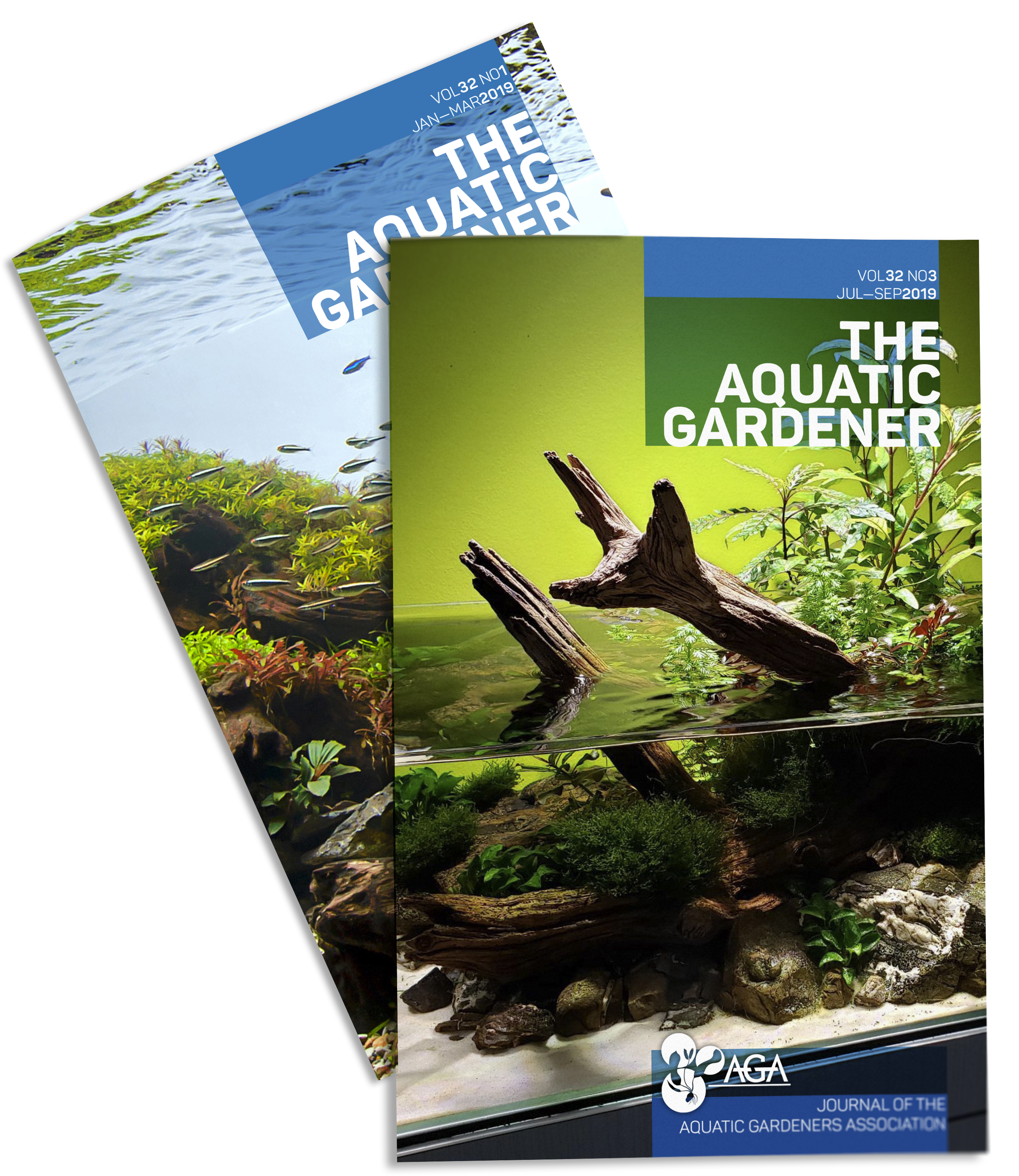
The Aquatic Gardener Magazine
Membership has its privileges—such as a subscription to the award-winning quarterly journal The Aquatic Gardener, available in both print and digital formats, access to the digital archive of all published issues as well as video from our convention speakers dating back 25 years. With more exciting projects on the horizon you’ll be part of a unique community of aquatic plant and aquascaping fans eager to expand our side of the aquarium hobby.
Our 2026 Sponsors
Premier Sponsor

Executive Sponsors





Associate Sponsors


Club Sponsors