#1331 Beyond the Ancient Tree


About This Aquascape
An ancient tree dominates the landscape, surrounded by dense vegetation shaped through layers of light and shadow. Beneath and beyond the massive trunk, glimpses of another forest emerge, creating a sense of depth and continuity. The composition was designed to make the boundaries of the enclosure disappear, allowing the viewer to imagine an untouched forest extending far beyond the visible scene.”
- Filter
- Undergravel Filtration with Recirculating Pump
- CO2 System
- none
- Lighting
- Skylight MID Spot LED
- Substrate
- Black Sand, Volcanic Sand
- Hardscape Materials
- Jujube Wood, Natural Cork Branches, Carbonized Cork Board, Lava Rock, Natural Vines
- Background
- Carbonized Cork Board
Species
Emperor Newt (Tylototriton shanjing)
Plant species
Hypnum plumaeforme, Moss sp., Pilea microphylla, Ficus thunbergii, Asparagus sp. ‘Q-ave’, Humata sp., Lepisorus onoei, Cryptocoryne sp., Hemianthus callitrichoides ‘Cuba’, Eleocharis sp. ‘Mini’, Anubias barteri var. nana ‘Green Wave’, Hydrocotyle sp., Biophytum sensitivum, Riccia fluitans, Lemna sp., Microsorum pteropus, Crepidomanes minutum
Fertilization
none
Judges' Comments
Although aquatic plants were used, the entry would be considered more of a terrarium versus a true representation of a riparium. Our guidelines state that a Riparium is described as a riverbank or shoreline depiction, which is only minimally represented in this entry. Additionally, in the scoring criteria, one of the metrics asked is “if the water section is used as an attractive addition to the display or if it is overlooked as part of the overall composition”. In this case, the aquatic section is very minimal and isn’t in the spirit of a faithful representation of a shoreline or riverbank.
— Bailin Shaw
Come Grow with The Aquatic Gardeners Association.
Since 1985 the Aquatic Gardeners Association has been the standalone organization focused on promoting aquatic plants, education, aquascaping, and fostering the community of planted aquarium enthusiasts.
The Aquatic Gardener Magazine
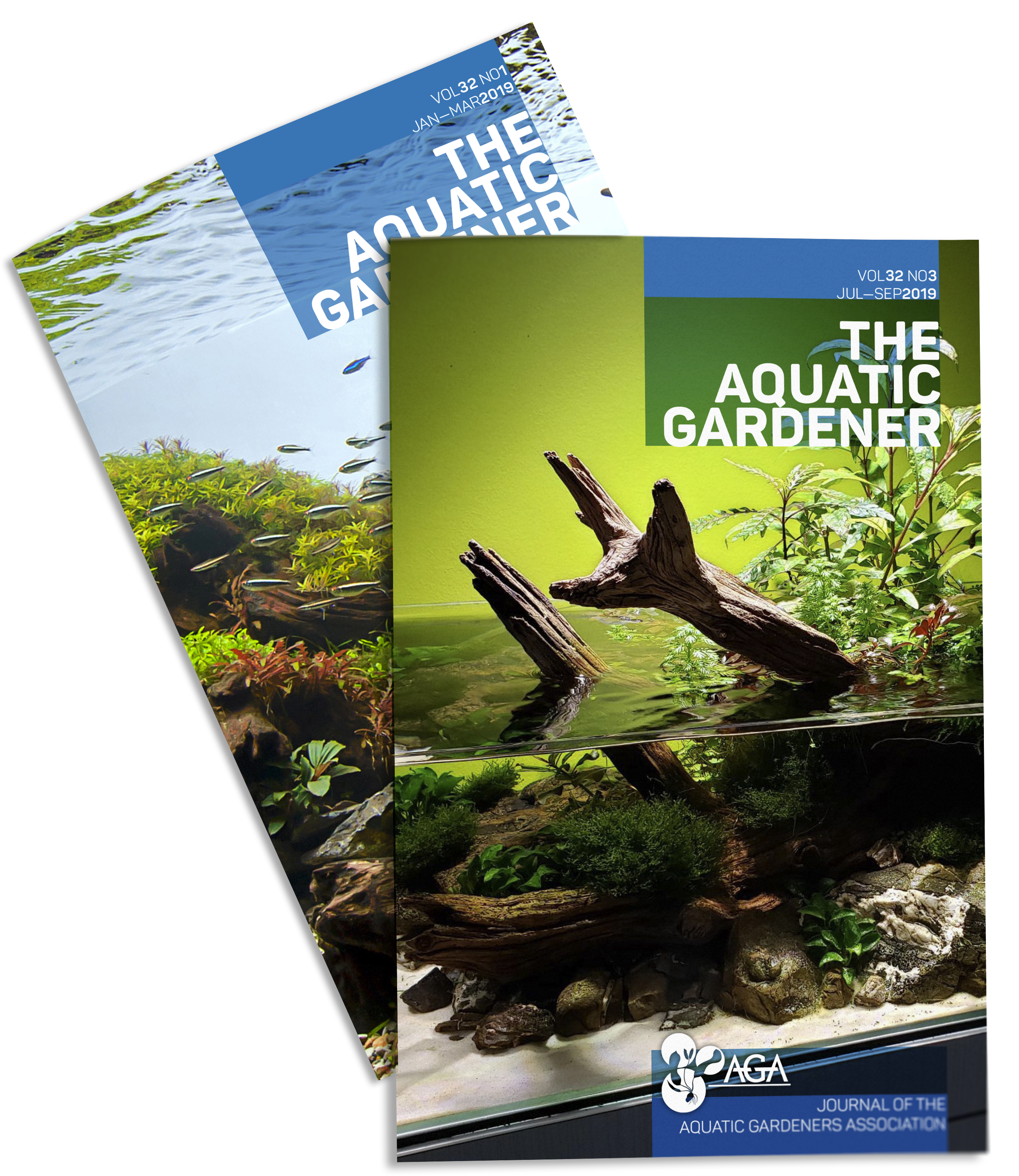
Membership has its privileges—such as a subscription to the award-winning quarterly journal The Aquatic Gardener, available in both print and digital formats, access to the digital archive of all published issues as well as video from our convention speakers dating back 25 years. With more exciting projects on the horizon you’ll be part of a unique community of aquatic plant and aquascaping fans eager to expand our side of the aquarium hobby.
Our 2026 Sponsors
Premier Sponsor

Executive Sponsors





Associate Sponsors


Club Sponsors