#1128 Rainforest Riverbank


About This Aquascape
Rainforest Riverbank is inspired by a tropical rainforest growing along a river, where the forest and water are closely connected. The main structure is made from hand-sculpted cement roots, carefully arranged to look like the roots of an old rainforest tree growing along the riverbank. The roots continue from the land into the water, creating a strong connection between the two environments. A custom-designed background was created to add depth and give the impression that the rainforest continues beyond the physical boundaries of the aquarium. The plants include Philodendron, Nephrolepis, Hydrocotyle, Dendrobium, and mosses. Discus, Neon Tetra, and freshwater snails represent the aquatic life of the river. Rather than relying on added fertilizers or CO₂ injection, the system is designed to utilize nutrients naturally generated by fish waste and submerged organic matter. Through continuous water circulation, these nutrients are distributed throughout the system, creating a natural connection between aquatic life and the vegetation on land. A concealed LED strip behind the rear glass creates a soft backlight beneath and behind the roots. When the Discus swim through this illuminated area, their bodies appear as moving silhouettes among the roots, creating the feeling of fish swimming through a shaded rainforest river beneath the forest canopy. The design focuses on the connection between forest, roots, water, and life. Instead of treating the land and water as separate parts, they are designed as one continuous environment. Rainforest Riverbank tells a simple story: the rainforest does not end at the water’s edge. Its roots continue beneath the river, connecting the forest above with the life below.
- Filter
- External canister filtration providing both mechanical and biological filtration.
- CO2 System
- No CO₂ injection is used.
- Lighting
- Four Kandila S-Series W-RGB aquarium lights provide balanced illumination across the composition while enhancing plant coloration and the natural atmosphere of the rainforest. A concealed LED strip behind the rear glass illuminates the aquatic area from behind the roots, revealing fish movement within the root structure and enhancing the depth and wild character of the riverbank.
- Substrate
- Bali silica sand and dried leaf litter.
- Hardscape Materials
- Hand-sculpted cement tree roots, shaped to recreate the appearance of ancient rainforest roots.
- Background
- Custom-designed printed background integrated with the hardscape to create depth and visually extend the rainforest beyond the physical boundaries of the aquarium.
Species
Symphysodon spp., Paracheirodon innesi, and freshwater snails.
Plant species
Philodendron spp., Nephrolepis spp., Hydrocotyle spp., Dendrobium spp., and mosses.
Fertilization
No additional fertilizers are used. Nutrients are supplied naturally through fish waste and submerged organic matter, then distributed through the water circulation system to support plant growth.
Judges' Comments
This paludarium captures a natural impression exceedingly well. Many paludarium attempt a stark break from life above to below the surface without much success or intentionality. This paludarium is a massive exemption. The sudden stark break to life below the surface demonstrates great intentionality in construction, informed by a strong understanding of natural habitats.
— Jack McCarley
Good job blending the background, it is hard tell where the scape ends and the photo begins.
— Nick Kinser
Come Grow with The Aquatic Gardeners Association.
Since 1985 the Aquatic Gardeners Association has been the standalone organization focused on promoting aquatic plants, education, aquascaping, and fostering the community of planted aquarium enthusiasts.
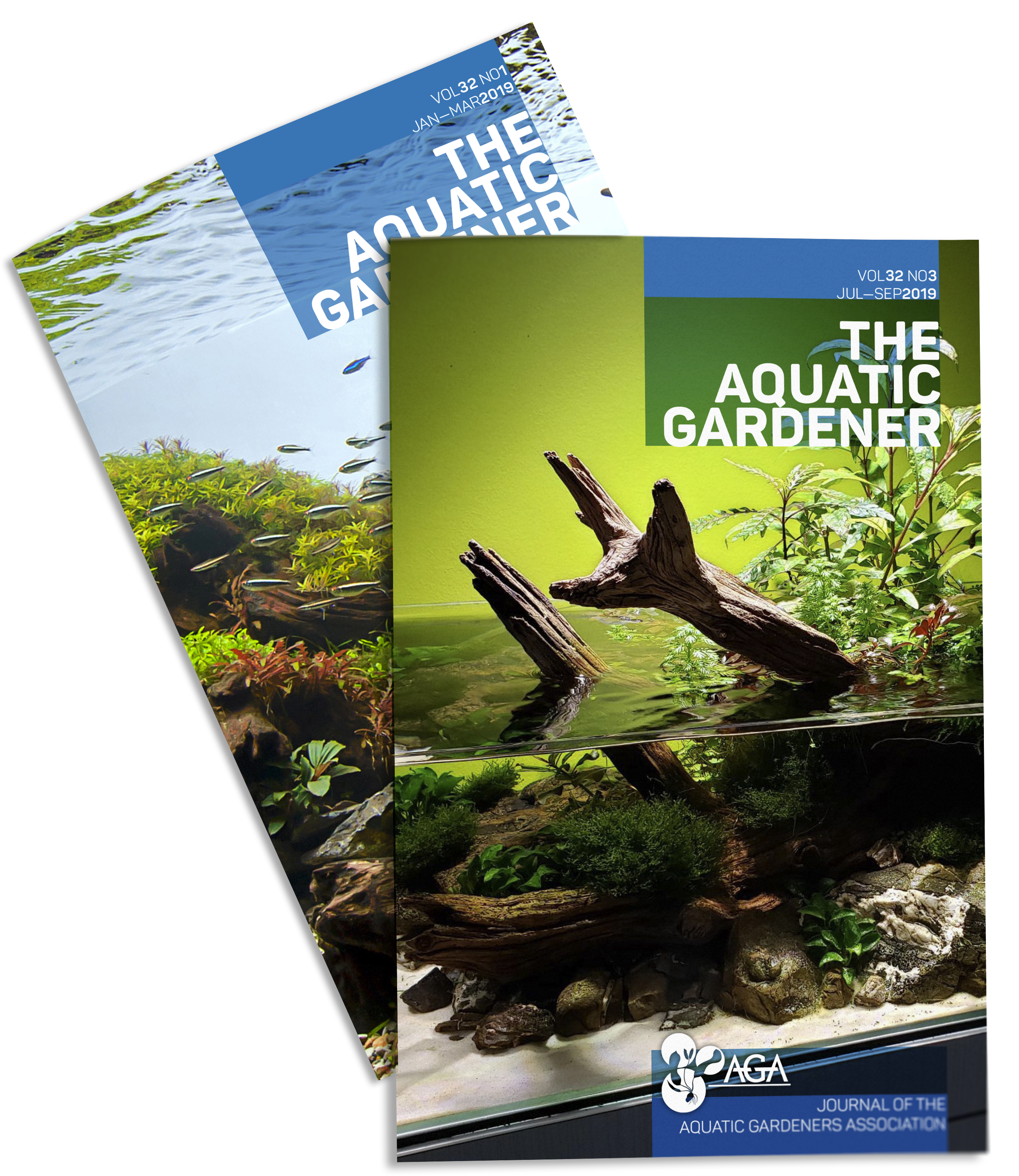
The Aquatic Gardener Magazine
Membership has its privileges—such as a subscription to the award-winning quarterly journal The Aquatic Gardener, available in both print and digital formats, access to the digital archive of all published issues as well as video from our convention speakers dating back 25 years. With more exciting projects on the horizon you’ll be part of a unique community of aquatic plant and aquascaping fans eager to expand our side of the aquarium hobby.
Our 2026 Sponsors
Premier Sponsor

Executive Sponsors




Associate Sponsors


Club Sponsors