Coastal Waters in Igarape Santa Cruz. Pte. Figueiredo. Amazonas. Brasil.
Coastal Waters in Igarape Santa Cruz. Pte. Figueiredo. Amazonas. Brasil.

About This Aquascape
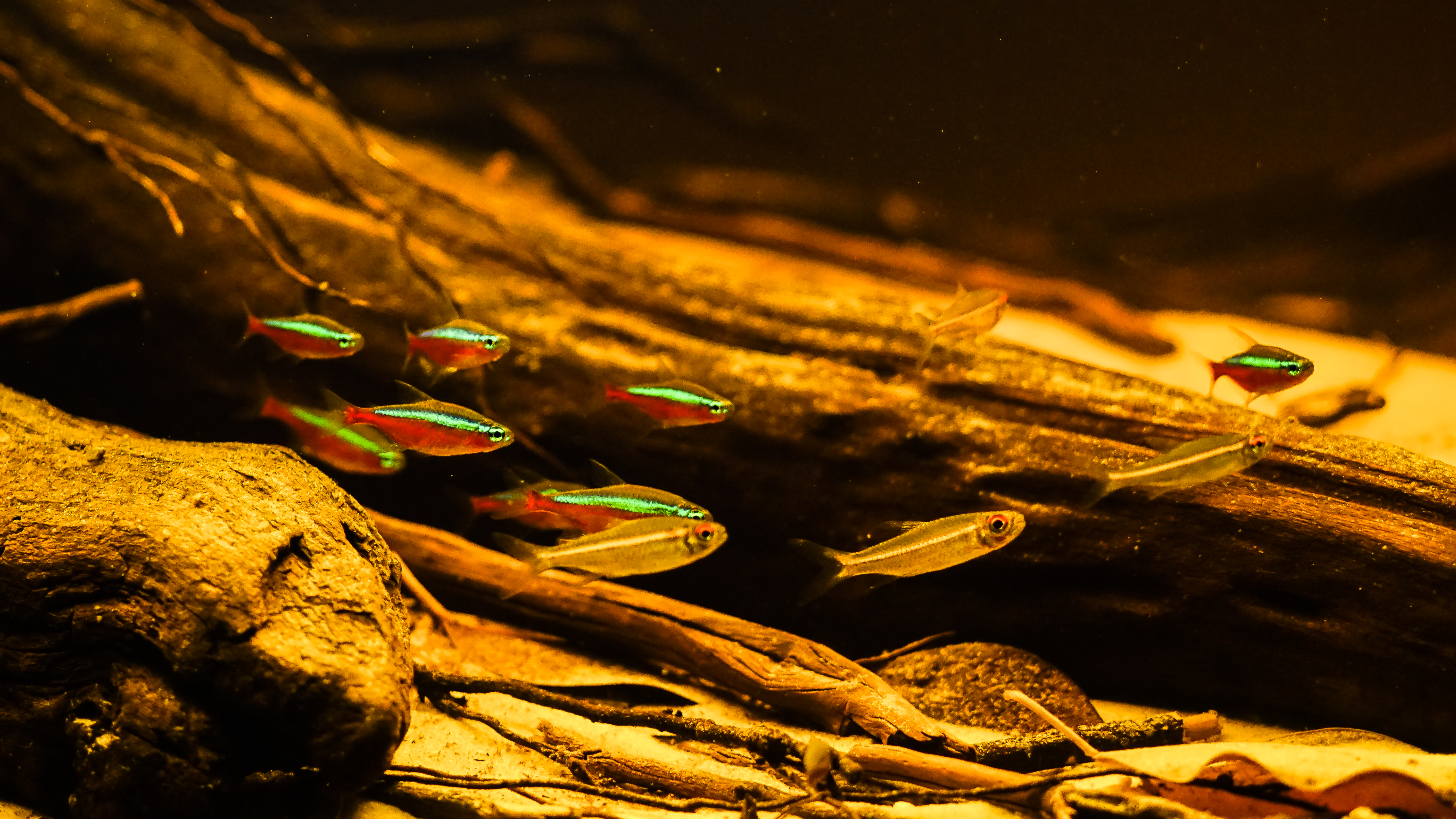
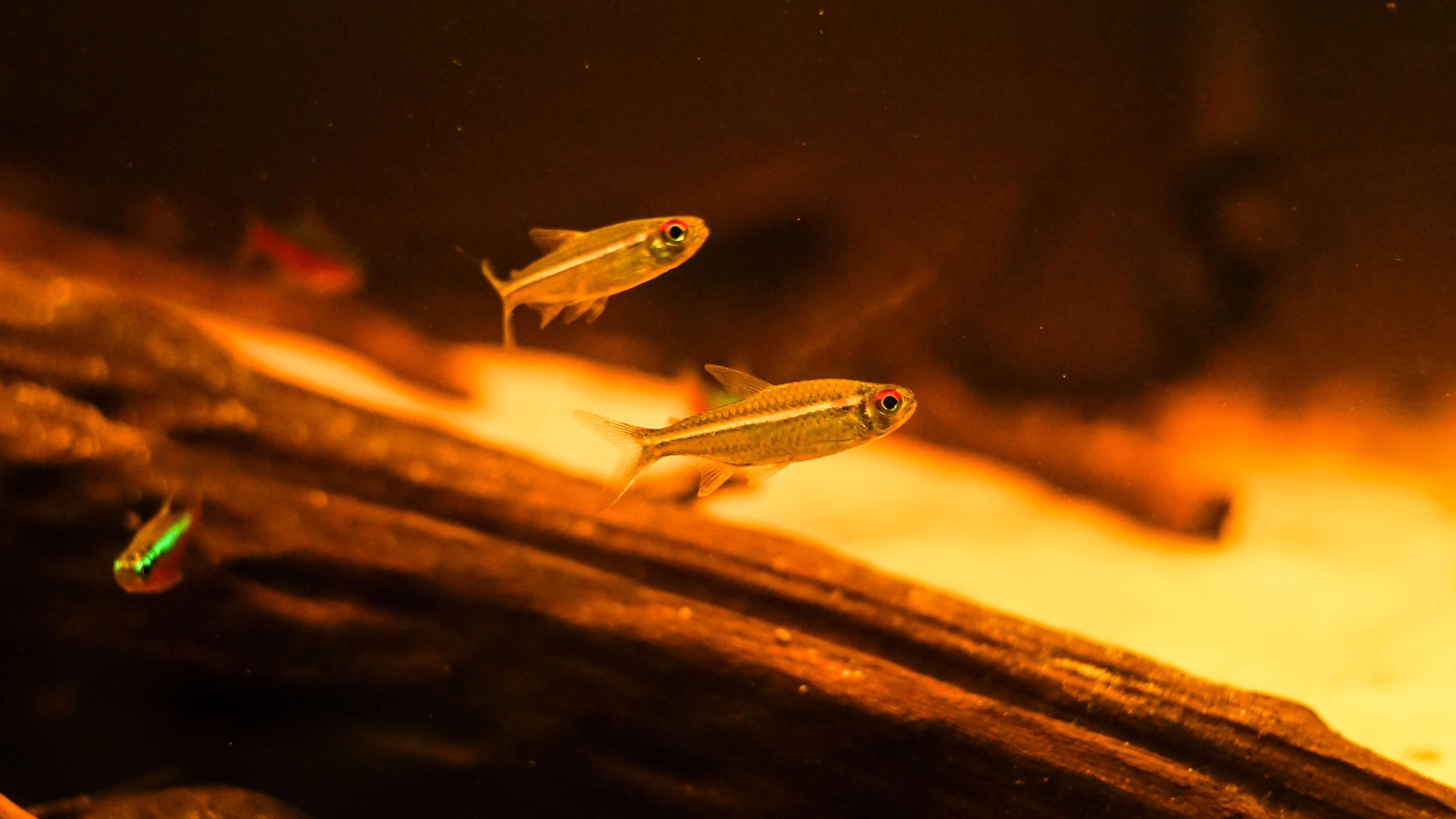
The idea for this aquarium arose from a desire to showcase the natural sympathy of the two species used, P. axelrodi and H. bellotii, and their schooling behavior. The latter species is not sold as an ornamental fish and is found by some importers by mistake when capturing several schooling species that live in the Rio Negro basin. It is a beautiful species to maintain. Being able to obtain them and display this behavior in a biotope aquarium is a source of satisfaction and a way to demonstrate the importance of caring for their habitat.
- Filter
- The aquarium is filtered with Aquaclear 20 waterfall filter. Matrix media for biological filtration.
- CO2 System
- n/a
- Lighting
- 6500k led bar and focalized lamp
- Substrate
- White silice sand
- Hardscape Materials
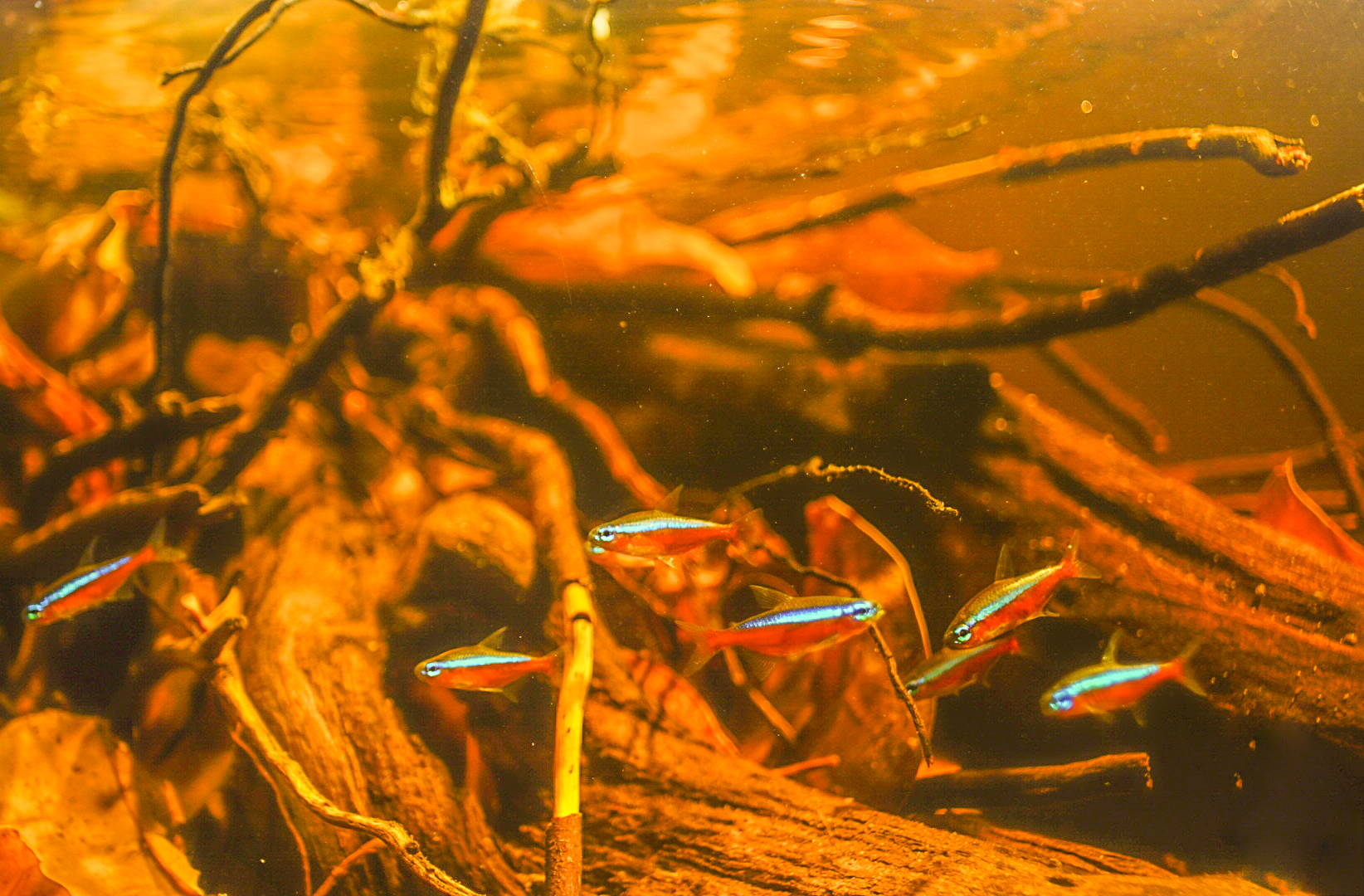
- Trunks, branches, dry roots, white silice sand, leaf litter.
- Background
- n/a
Species
Paracheirodon axelrodi, Hemigramus bellotii.
Plant species
N/A
Fertilization
n/a
Biotope Information
CHARACTERISTICS OF THE NATURAL BIOTOPE Igarapé Santa Cruz is located in Pte. Figueiredo, Amazonas State, Brazil. 50°29'12" W; 1°40'11" S (rising) 50°29'26" W; 1°41'04" S (ending) Located in a suburban area of the municipality of Breves, in the Marajó mesoregion, Pará State, the Igarapé is approximately 2 km long, with a depth at low tide of 36 cm (near the source) to 73 cm (near the mouth); and at high tide of 112 cm (near the source) and 151 cm (near the mouth). It is a tributary of the Urubu River, part of the Rio Negro basin. This igarapé has the unique characteristic of receiving waters that could be called rapids because along its course, one can find waterfalls and cascades such as the "Cachoeiras de Iracema." This igarapé is used by local residents for vacations and bathing in its waters due to its tourist appeal. The rapids and waterfalls are presented in the form of slabs, represented by layers of sandstone that outcrop in the stream. It is located deep in the Amazon rainforest, surrounded by dense vegetation that influences the characteristics of the water and the ecosystem of the igarapé. Its waters are often dark due to the decomposition of organic matter (leaves, branches, etc.) that releases humic substances, such as humic acids, which acidify the water. It plays a crucial role in the Amazon ecosystem, hosting a great diversity of species and acting as biological corridors. The soils on the banks of the igarapé can be acidic and have low natural fertility. The pH in the Santa Cruz Igarapé is typically in the range of 4.8 to 5.5, indicating an acidic condition. This is why it is difficult to find aquatic plants in the area. We found fine white sand with a large amount of debris on the bottom and shores. In its waters, we can find a great diversity of fish species, which can also be found throughout the entire Río Negro basin. This aquarium represents the shores of the Santa Cruz Igarapé, where tree trunks submerged by the flooding reveal their roots buried in the sand, and a large number of leaves and branches falling from the riparian zone can be seen. This serves as a refuge for small schooling species. SOURCES - GEOTECHNICAL EVALUATION THEGEOTURIST ATTRACTIONS OF PRESIDENTE FIGUEIREDO. - Ichthyofauna from tributaries of Urubu and Amazonas rivers, Amazonas State, Brazil - Sanitary situation and the use of the water of Santa Cruz Creek, municipality of Breves, Archipelago of Marajó, Pará, Brazil
Walter Vazquez
Avellaneda, Buenos Aires, Argentina
Quick Stats
- Style
- Biotope
- Size
- 60x40x25 cm
- Volume
- 60 L (15.9 gal.)
- Plant Species
- 1
- Fish Species
- 2
Judges' Comments
What a great job! The elements coincide with the natural biotope, the composition is very attractive to the eye although in the natural biotope it is not so perfectly accommodated, a little detritus on the branches would give it a greater similarity, but in general very well done, the color of the water is appreciated.
— Víctor Ortiz
Smooth sand with tannin water and driftwood. That's exactly what is found in the Cardinal Tetra biotope :)
— Ivan Mikolji
Another display where the author has clearly done their research, resulting in an authentic and effective display. The fishes look to be in good condition, while the attention to detail regarding the hardscape and botanicals is clearly visible. The way the blackwater fades into the background feels very natural and adds a sense of depth, to what is actually quite a small aquarium. I like how the author has chosen to highlight the dynamic between two sympatric species, which also adds to the authenticity of the display. If we had had this display in our Amazon section when I worked in the aquarium at London Zoo, I would have been very pleased and proud! This biotope display shows what can be done with minimal materials and species, when research and attention to detail is carefully applied. Parabéns!
— Tai Strietman
Come Grow with The Aquatic Gardeners Association.
Since 1985 the Aquatic Gardeners Association has been the standalone organization focused on promoting aquatic plants, education, aquascaping, and fostering the community of planted aquarium enthusiasts.
The Aquatic Gardener Magazine
Membership has its privileges—such as a subscription to the award-winning quarterly journal The Aquatic Gardener, available in both print and digital formats, access to the digital archive of all published issues as well as video from our convention speakers dating back 25 years. With more exciting projects on the horizon you’ll be part of a unique community of aquatic plant and aquascaping fans eager to expand our side of the aquarium hobby.