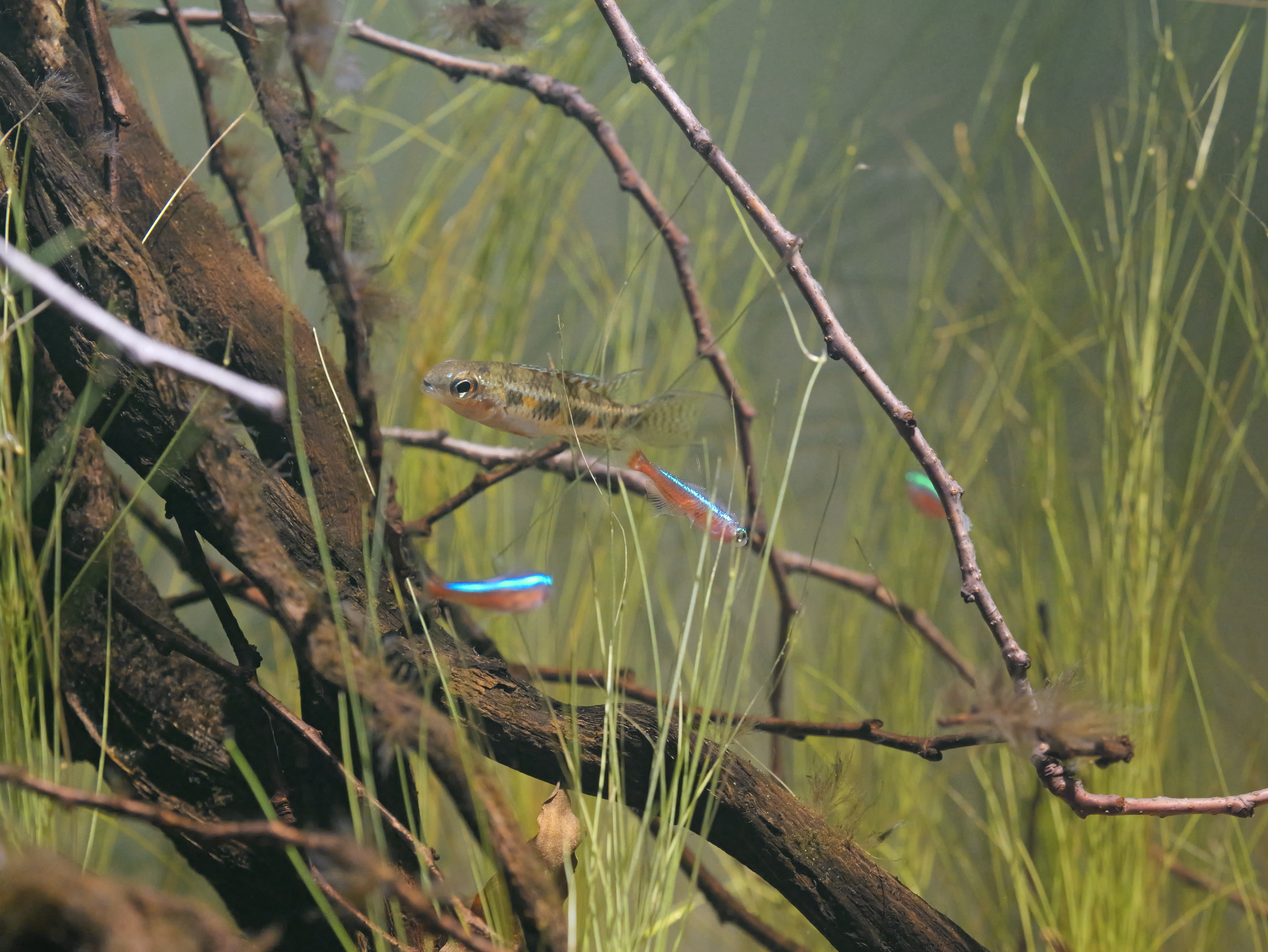
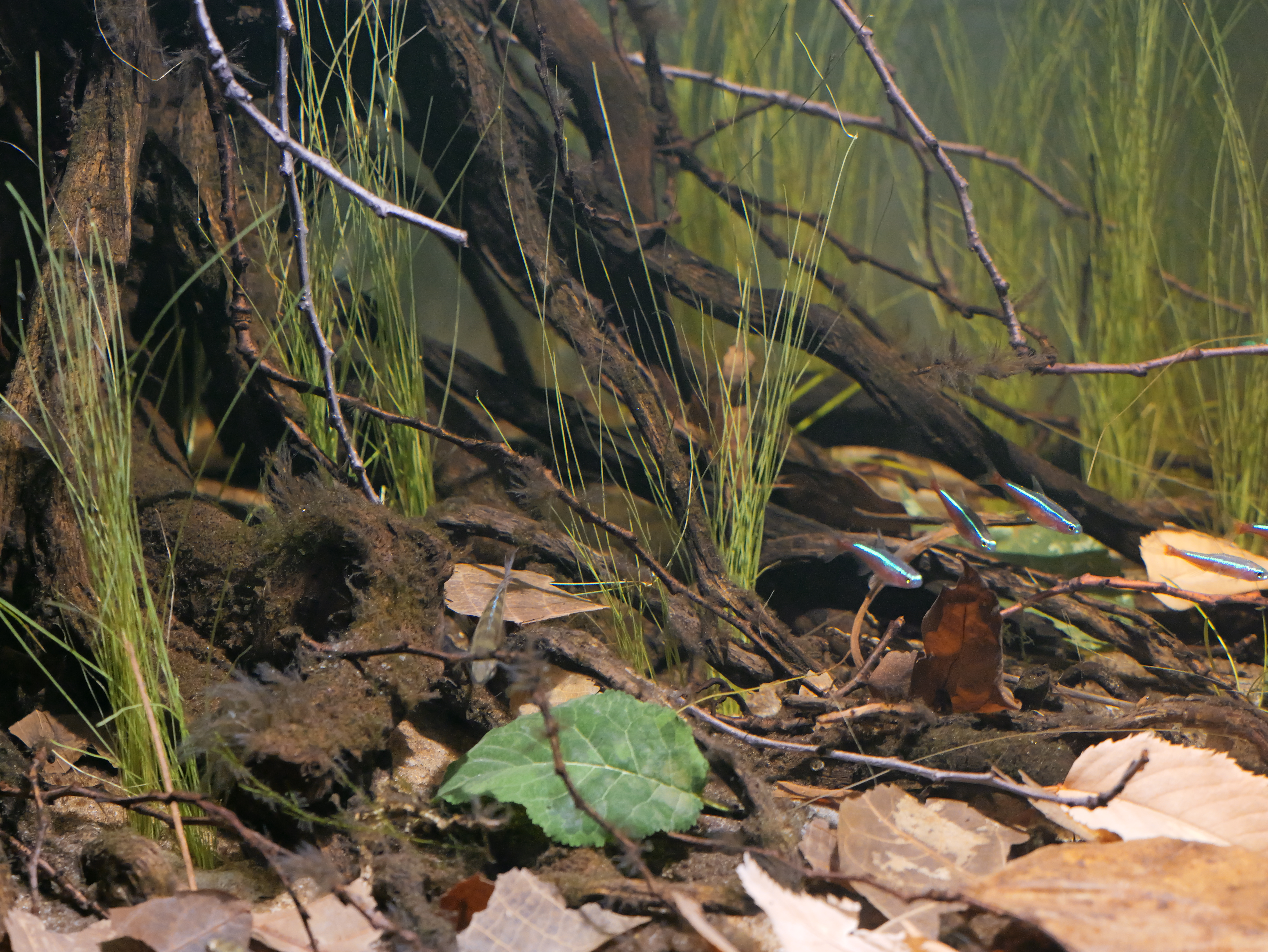
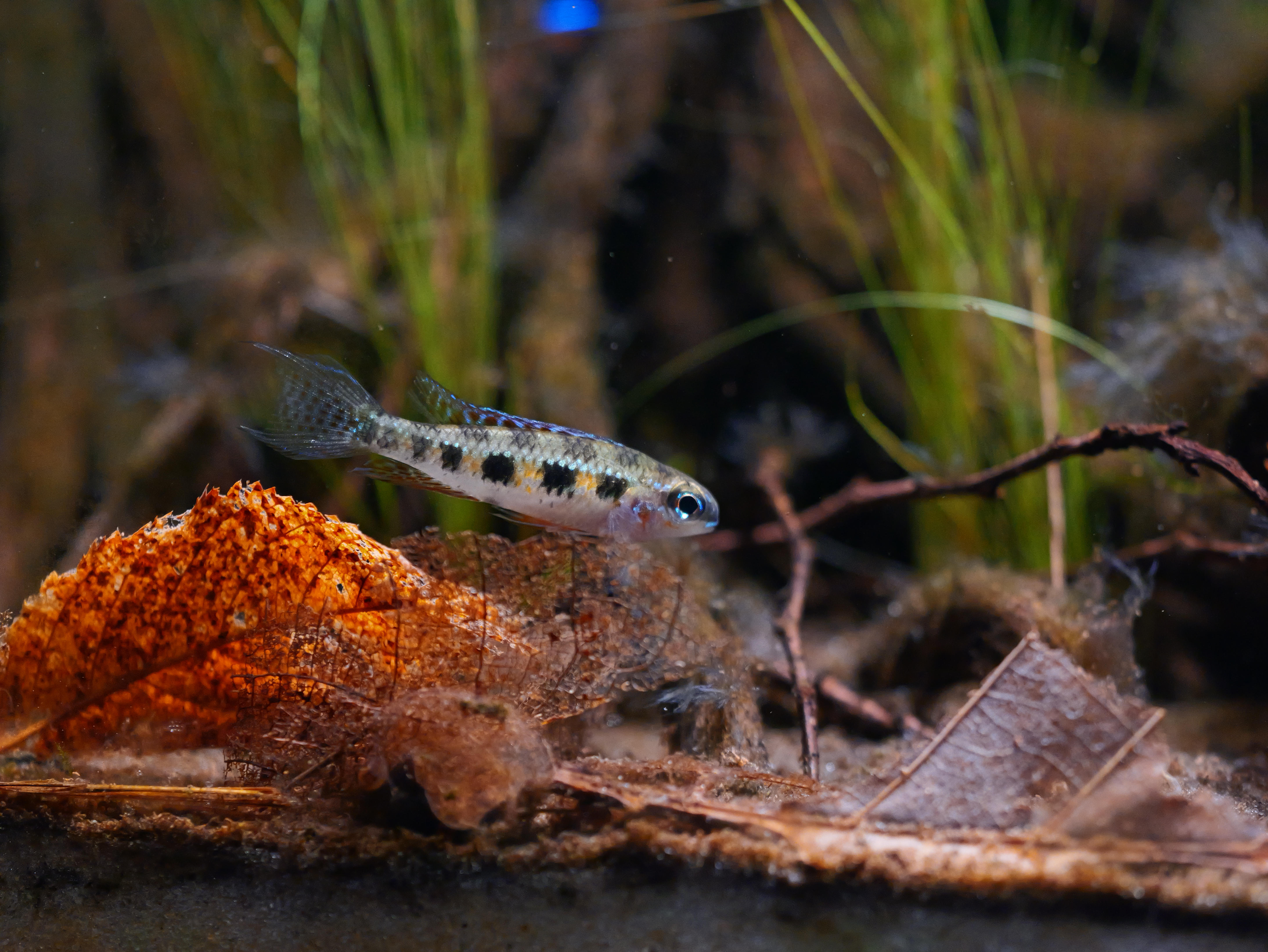
Zalala Swamp Reservoir Near Barcelos, Rio Negro Basin, Brazil.
Zalala Swamp Reservoir Near Barcelos, Rio Negro Basin, Brazil.

- Filter
- Eheim Classic 150.
- CO2 System
- none
- Lighting
- 15w 900lm 6500k spot light
- Substrate
- only 03mm quartz sand
- Hardscape Materials
- There are 03 mm Quartz sand and dry botanicals, leaves and dry tree branches and roots collected from nature, similar to those in the biotope.
- Background
- A frosted background was used on the aquarium's rear glass. Behind the frosted glass, a background similar in color to nature was used, along with thin twigs to create a sense of depth between the background and the rear glass.
Species
Dicrossus Filamentosus, Paracheirodon axelrodi
Plant species
Eleocharis sp
Fertilization
none
Biotope Information
The Zalala marsh pond appears to be an area that floods seasonally. Located in a forested area, this wetland floor contains a significant amount of dry vegetation. The bottom layer is mud, cream-colored silt sand, leaf litter, driftwood, and wonderful areas where terrestrial plants are submerged. The Negro River, the main tributary of the Amazon, originates from various sources, including the Vaupés (Mapés) and the Amazon.com. The Guainía River originates in the rainforests of eastern Colombia. The Guainía flows eastward and then arcs northeast and southeast, forming the Colombia-Venezuela border. Below its confluence with the Brazo Casiquiare near San Carlos de Río Negro, the river takes its name from the Negro, a natural waterway that brings water from the Orinoco River in Venezuela, and enters Brazil. The Negro meanders generally east-southeast, receiving the Branco River and other tributaries before reaching Manaus. There, it joins the Solimões River to form the Amazon. It is approximately 1,400 miles (2,250 km) long, 850 miles (1,370 km) of which are in Brazil. Approximately 450 miles (725 km) above its mouth are navigable. Although settlement along its banks is sparse, the river is an important transportation artery. The clear, jet-black color of the Negro River, from which it takes its name, is due to the decomposition of organic matter in marginal swamps and the low silt content. The black waters contrast strikingly with the yellowish, silt-laden waters of the Branco River and the waters of the Amazon River. The Zalala Marsh ponds are located in a densely forested area and generally resemble black water, resulting in high organic decomposition. Therefore, the waters have a pH of 0-50 microsiemens, 0 kH, a pH of 4.5-6.0, and a temperature of 25-29 degrees Celsius. The water values in my aquarium are similar to those in nature; 5.2 pH, 78 TDS, 26 degrees Celsius. Years ago, I remember watching videos of this region and being fascinated by the biotopes and deciding to become a biotope enthusiast. My admiration for tetras and dwarf cichlids inspired me to research their real habitats and, thus, create biotopes. This fostered an understanding of the importance and value of natural aquatic systems in our ecosystem and a desire to share this knowledge with my surroundings in my aquarium hobby. I‘d been wanting to create a biotope for this region for years, but I couldn‘t find the plants and fish species I wanted. Now, everything is ready, and I‘ve created this biotope as a thank you to the region that inspired me to love biotopes, broaden my perspective, and raise my awareness of the hobby. Referances: https://www.youtube.com/watch?v=5EV12vdZ61g https://gia.org.br/portal/caracteristicas-fisicas-e-quimicas-dos-rios-amazonicos/ https://www.fishi-pedia.com/fishes/basins/rio-negro chrome-extension://efaidnbmnnnibpcajpcglclefindmkaj/https://shs.hal.science/halshs-04726640v1/document
Arif Hikmet Başeğmez
Sivas, Türkiye, Türkiye
Quick Stats
- Style
- Biotope
- Size
- 50x40x32 cm
- Volume
- 64 L (16.9 gal.)
- Plant Species
- 1
- Fish Species
- 2
Judges' Comments
A very well made aquarium, the elements, the composition are correct, the roots with algae and the length of the Eleocharis shows maturity of the aquarium, a little detritus would be appreciated and light management with a darker water color, in terms of depth management it is very well done. Many congratulations!
— Víctor Ortiz
The quality of entries this year is very high, making it difficult to pick favourites, and this display falls very much into this category. The author has clearly done plenty of research and after examining the materials they provide as evidence, I can say they have done a sterling job of replicating the habitat! I also appreciate the passion and history of the desire to create this biotope, which, combined with the aesthetic and technical elements, make it one of my favourites. The author has managed to make the best of a small tank, using hardscape and botanicals in an effective manner, and combining plants laid out in a natural style, as seen in footage of the biotope. The numbers of fishes feel appropriate to the tank and to the way they appear in the wild. I like the touch of using a background with similar colours to add a sense of depth, it works very well in my opinion. Well done on your wonderful entry!
— Tai Strietman
Come Grow with The Aquatic Gardeners Association.
Since 1985 the Aquatic Gardeners Association has been the standalone organization focused on promoting aquatic plants, education, aquascaping, and fostering the community of planted aquarium enthusiasts.
The Aquatic Gardener Magazine
Membership has its privileges—such as a subscription to the award-winning quarterly journal The Aquatic Gardener, available in both print and digital formats, access to the digital archive of all published issues as well as video from our convention speakers dating back 25 years. With more exciting projects on the horizon you’ll be part of a unique community of aquatic plant and aquascaping fans eager to expand our side of the aquarium hobby.