Clogs and Clots
Reedy River Watershed, Greenville, South Carolina


- Filter
- N/A
- CO2 System
- N/A
- Lighting
- ONF Flat One
- Substrate
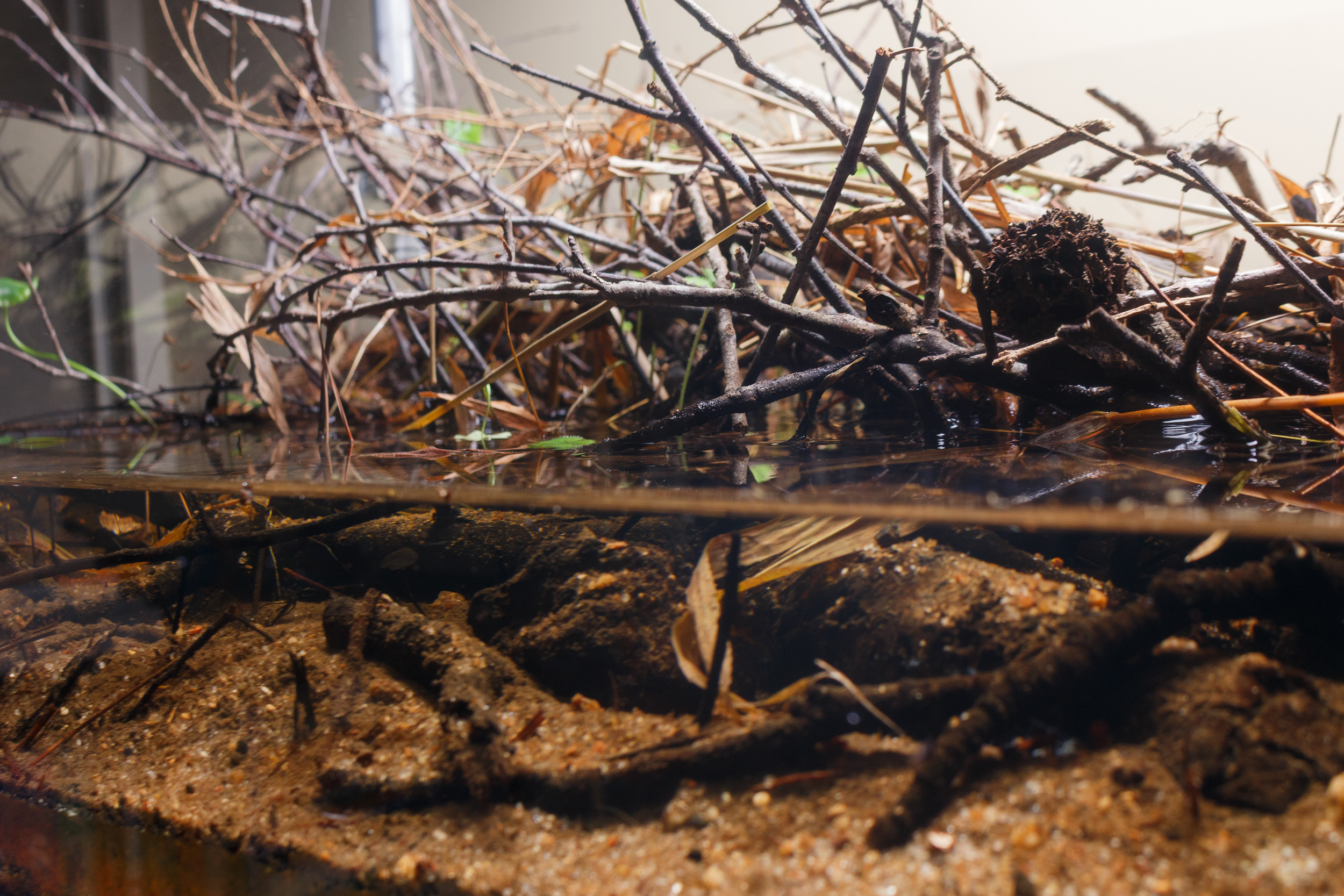
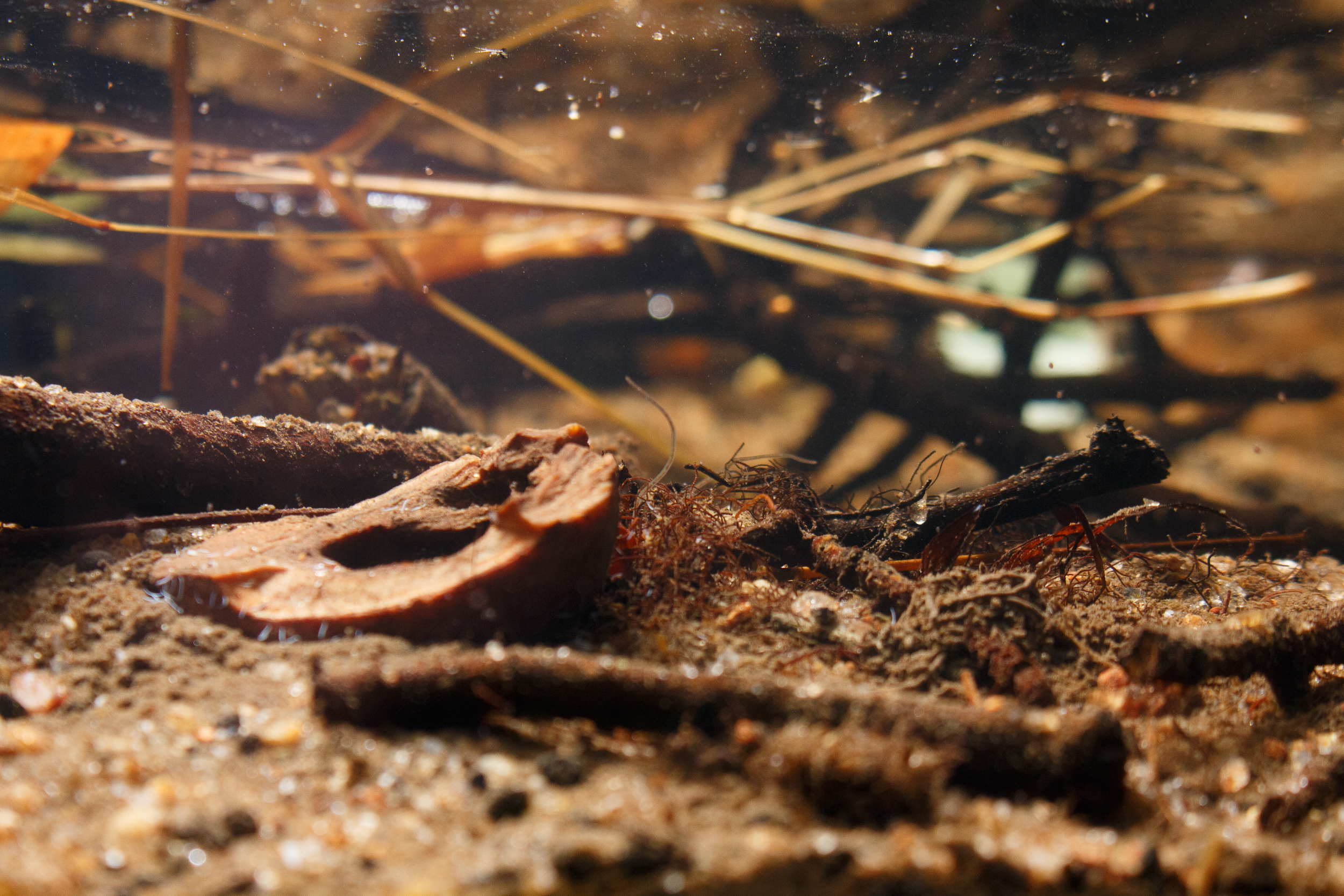
- Locally-collected sand, clay, mica, and loam.
- Hardscape Materials
- Locally-fallen deciduous and coniferous riparian tree limbs. Various seedpods, leaves, and dead grasses.
- Background
- N/A
Species
Lymnaea columella Tubifex tubifex Lumbriculus sp.
Plant species
Hydrocotyle verticillata Dichanthelium sp. Usnea sp.
Fertilization
ADA Bottom Plus
Biotope Information
This biotope captures a clogged channel in the late-fall watershed of the Reedy River in Upstate South Carolina, a key tributary of the Santee River Basin. The landscape is shaped by iron-rich red clay soils, carving winding river channels. The red-orange riverbeds sparkle with mica, worn from the erosion of common metamorphic rock in the region. During fall, deciduous trees shed their leaves and drop dead branches, which accumulate in the shallow channels to form naturally occurring debris dams. These seasonal obstructions trap organic material and sediment transported from upstream, creating complex microhabitats to provide shelter and foraging grounds for small fish and invertebrates. https://scnps.org/wp-content/uploads/2024/04/SC_NativePlants_Family_RegionalAbun_20220108.pdf https://www.greenvillecounty.org/LandDevelopment/pdf/RiparianBufferManualFinal.pdf
Jack McCarley
Simpsonville, South Carolina, United States
Quick Stats
- Style
- Biotope
- Size
- 90x45x23 cm
- Volume
- 40 L (10.6 gal.)
- Plant Species
- 4
- Fish Species
- 3
Judges' Comments
This is an excellent example of a North American biotope, focusing on microfauna and seasonal representation, which is very different from tropical biotopes. Honestly, the first impression is of a barrier of branches and accumulated leaves as seen in nature, which is the main objective of this biotope aquarium. Great job!
— Víctor Ortiz
I have seen these miniature, natural, river dams or clots in the wild and this biotope aquarium recreates them very accurately. What is more surprising to me is the fact of noticing these clots (micro habitats) in the wild and then having the idea transported into a biotope aquarium. These ideas, which surprise me, which make me stop and say: "Wow, why didn't I think of that?" is what fusing nature with the aquarium hobby should be about!
— Ivan Mikolji
This display deserves top marks from me! The natural aesthetic of the substrate, the clearly carefully-placed, yet authentically-organic placement of the branches, the use of minimal planting, placed so that they look as they would in the wild, it all adds up for me. As a biotoper who focusses on fishes and plants, I think it takes a degree of courage to submit such an entry, without fishes or even large molluscs, just a few snails and tiny invertebrates and very little planting. I get the sense the author knows this habitat well, which has translated itself into a display which looks like a genuine slice of nature. Well done!
— Tai Strietman
Come Grow with The Aquatic Gardeners Association.
Since 1985 the Aquatic Gardeners Association has been the standalone organization focused on promoting aquatic plants, education, aquascaping, and fostering the community of planted aquarium enthusiasts.
The Aquatic Gardener Magazine
Membership has its privileges—such as a subscription to the award-winning quarterly journal The Aquatic Gardener, available in both print and digital formats, access to the digital archive of all published issues as well as video from our convention speakers dating back 25 years. With more exciting projects on the horizon you’ll be part of a unique community of aquatic plant and aquascaping fans eager to expand our side of the aquarium hobby.